
Revive Your Game: Tennis Court Repair and Resurfacing
A beautiful, vibrant court is the heart of any community, school, or backyard, but weathering and time eventually take a toll on the playing surface.
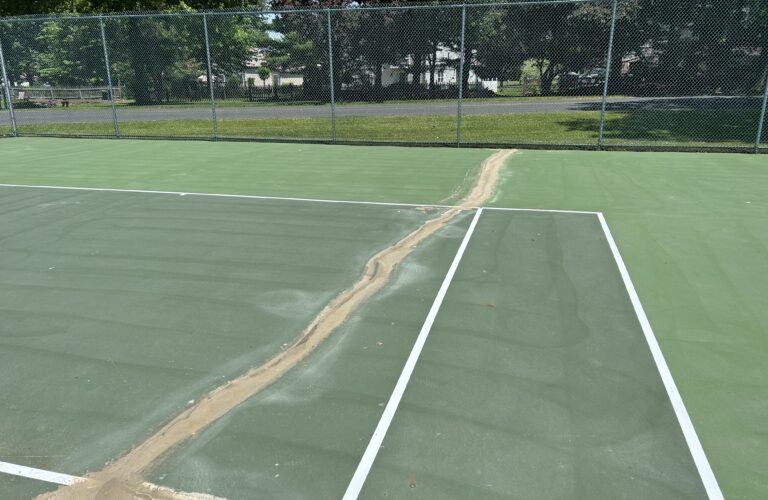
Over time, a thriving athletic space can become plagued by unsightly surface cracks, birdbaths, or peeling paint.
Because of the intense seasonal freeze-thaw cycle, ignoring minor surface damage today can quickly spiral into severe foundational failures tomorrow.
Whether you want to restore pristine playing conditions for tennis or tap into the explosive popularity of the fastest-growing sports by adding a pickleball court, a professional refresh can breathe new life into your facility.
If you’ve been searching for expert tennis court repair near me, Lancaster Asphalt Systems can help.
Let’s dive into what causes court damage, how to fix it, and how to make a highly cost-effective investment in your property’s athletic future.
Understanding the Damage: Why Do Tennis Court Cracks Form?
Before diving into a remedy, it’s essential to understand why an asphalt or concrete base degrades in the first place. Outdoor courts are constantly at the mercy of the elements, and several primary culprits are usually at play:
- The Freeze-Thaw Cycle: Rain and melting snow find their way into microscopic pores in the asphalt. When temperatures drop, this trapped water freezes and expands, widening the gaps and creating noticeable cracks.
- Drainage Issues: If a court wasn’t graded perfectly during its initial sports construction, or if surrounding landscaping has shifted, standing water will pool on the surface. This pooled water slowly erodes the underlying binders.
- UV Exposure: The sun’s intense ultraviolet rays bake the court daily, drying out the acrylic top coat, causing colors to fade, and making the asphalt brittle enough to split under pressure.
Catching these issues early prevents moisture from destabilizing the stone base beneath the court.
For a deeper look at how different base materials hold up over time, explore our resource on Understanding Tennis Court Types.
Tennis Court Repair vs. Resurfacing: Which Do You Need?

Property managers and homeowners often wonder: Can I get away with a quick fix, or do I need a total overhaul?
Knowing the difference between targeted tennis court repair and full resurfacing will save you time and money.
When to Choose Simple Tennis Court Crack Repair
If your court is structurally sound but has minor flaws, targeted repairs are ideal. This approach is best for:
- Isolated, minor “hairline” cracks (under 1/2 inch wide) that haven’t caused the surrounding asphalt to sink or buckle.
- Fixing minor depressions (often called “birdbaths”) where water pools after a rainstorm.
To see how professional patching restores a level playing field, check out our Asphalt & Concrete Repair Services.
When It’s Time for Tennis Court Resurfacing
A full resurfacing is required every 4 to 8 years as a natural part of proper tennis court maintenance. You should opt for resurfacing if you notice:
- Widespread “alligator cracking” (networks of interconnected cracks resembling reptile skin) across the entire playing area.
- Severe fading, peeling paint, or a smooth texture that has lost its non-slip player traction.
Expert Industry Insight: Depending on your climate, a combination of heavy-bodied sand-filled acrylic fillers for structural rigidity and highly flexible sealants for joint movement is required to keep cracks from immediately reappearing.
Step-by-Step: How to Repair Tennis Court Cracks Effectively
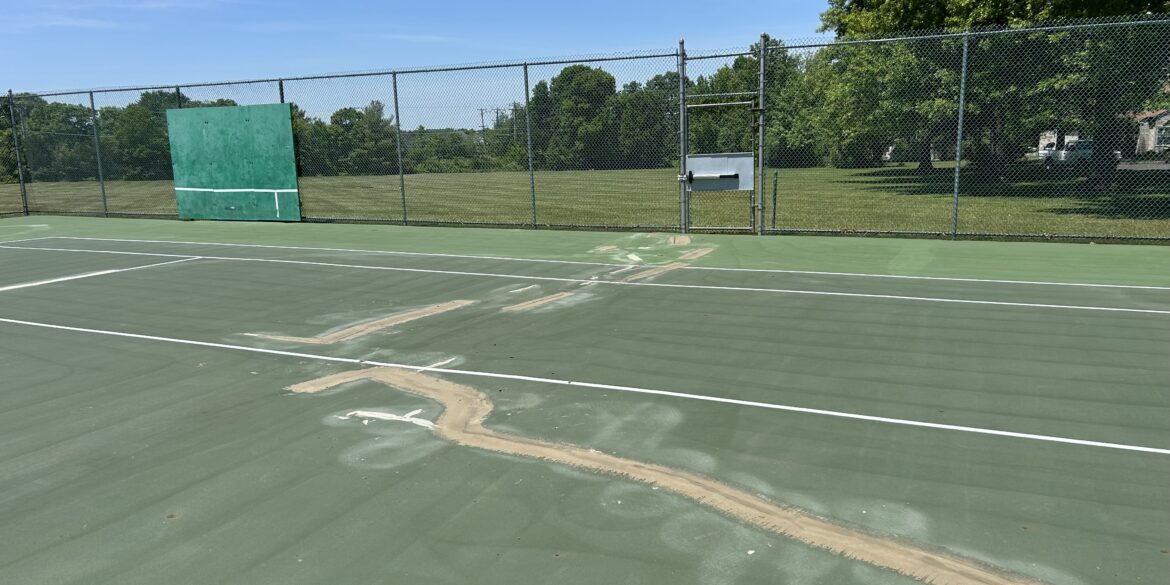
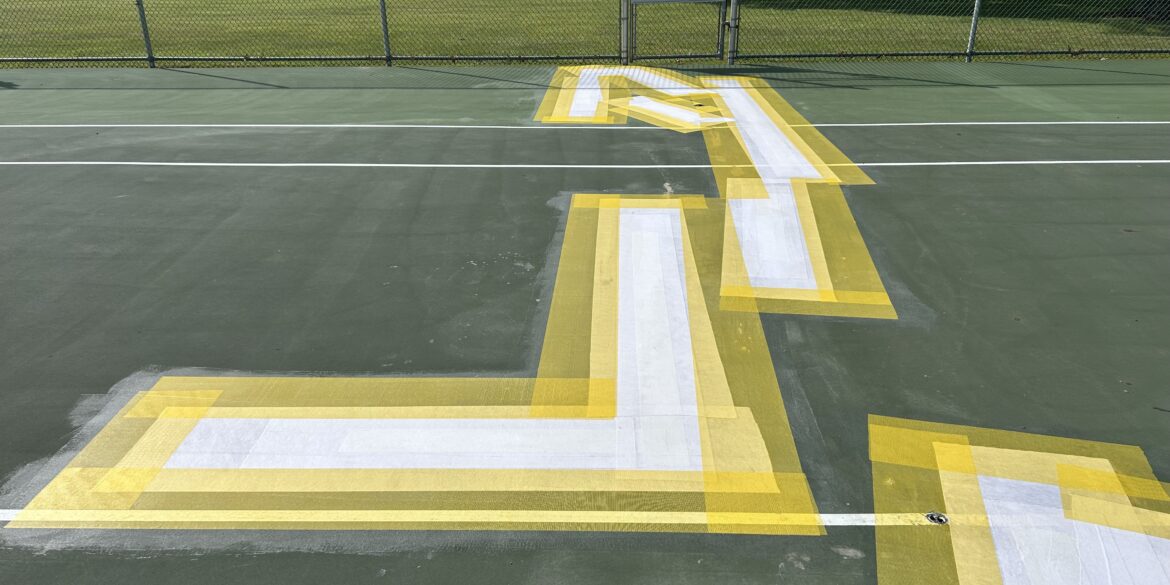
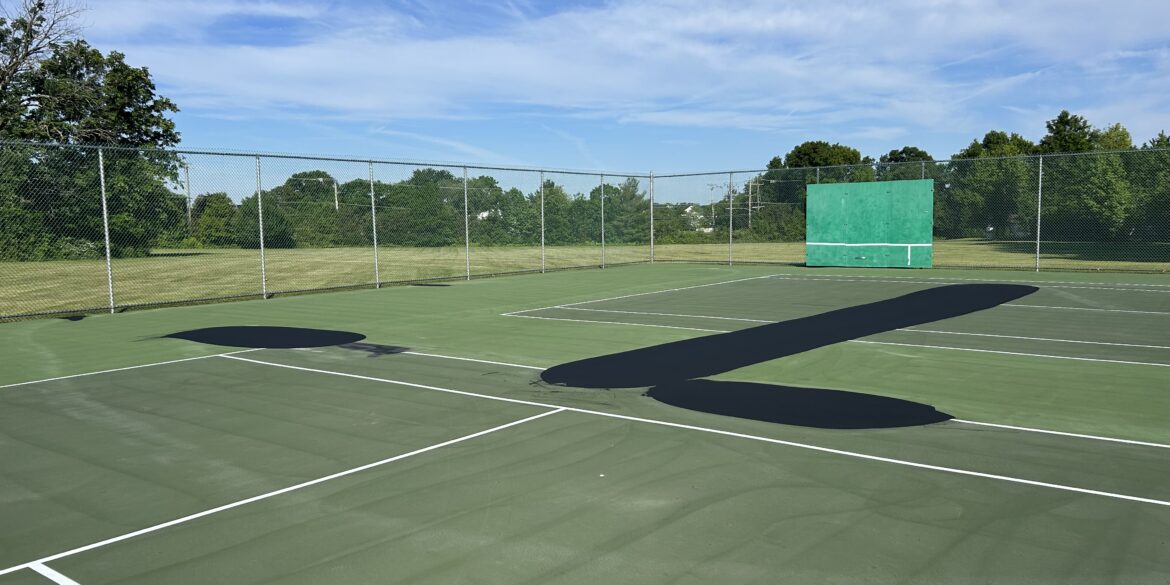
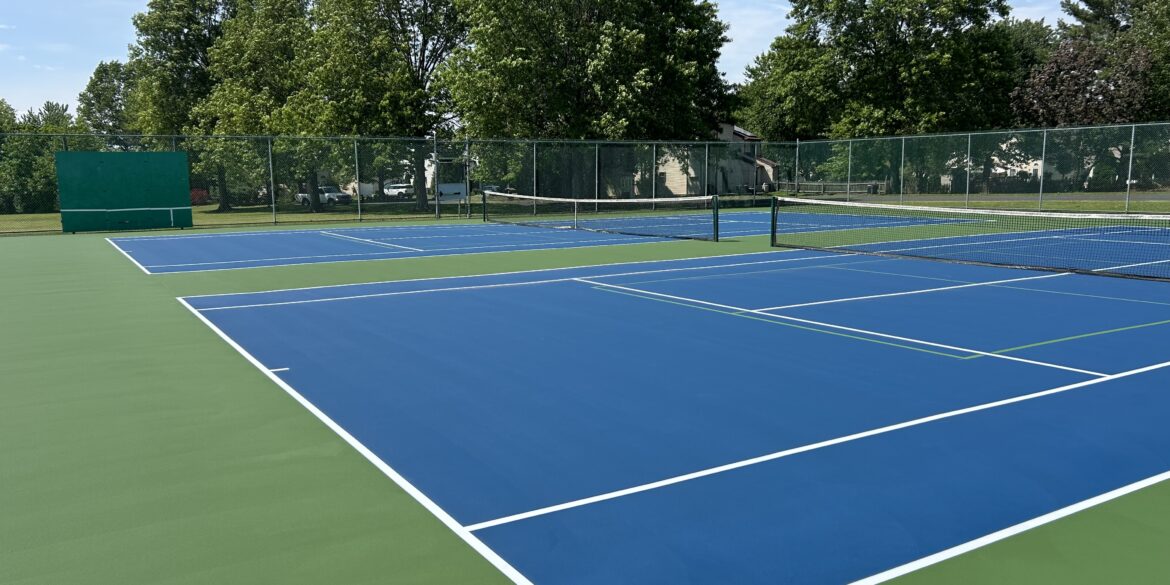
When addressing how to repair tennis court cracks, a meticulous, multi-step process is required to ensure the fix lasts for seasons to come. A standard professional remediation involves:
- Preparation & Cleanout: Technicians use high-pressure air and mechanical routing tools to purge dirt, weeds, and loose debris from deep within the cracks.
- Addressing Subbase Issues: Any underlying drainage issues or soft spots in the subgrade must be stabilized first so the fix doesn’t shift.
- Filling & Patching: Specialized acrylic court patch binders or flexible elastomeric compounds are packed into the cracks.
- Leveling & Smoothing: The patch is carefully scraped, sanded, and blended to match the texture and height of the surrounding court surface.
A Note on DIY Kits: It can be tempting to grab a generic hardware store asphalt filler, but these consumer-grade products lack the thermal flexibility and acrylic compatibility needed for sports surfaces. They frequently crumble within one season, leaving behind dangerous trip hazards for players.
The Cost Factor: How Much Does It Cost to Repair a Tennis Court?
When budgeting for facility upgrades, understanding how much it costs to repair a tennis court is usually top of mind. Because every court suffers unique wear patterns, the average cost depends heavily on a few distinct variables:
- The total linear footage of the cracks requiring treatment.
- The extent of foundational leveling and drainage correction needed.
- Whether the project is limited to localized crack filling or includes a comprehensive overlay and new multi-layer color coatings.
Investing in proactive repairs is incredibly cost-effective when compared to the alternative: ignoring the damage until the asphalt completely fails, which requires a six-figure excavation and total reconstruction.
Maximize Your Space: Transitioning to a Pickleball Court

If you’re already scheduling a tennis court repair and resurfacing project, it is the absolute perfect time to reimagine your athletic space.
You can maximize your investment and boost community engagement by transforming an underutilized tennis court into a multi-sport hub.
Because a pickleball layout is significantly smaller than a tennis court, a single tennis footprint can easily host up to four distinct pickleball courts.
You can opt for blended, multi-sport line striping to keep both sports playable, or convert the area entirely to dedicated pickleball surfaces to meet the high demand of local players.
Learn more about your layout possibilities by browsing our specialized Tennis Court Services and Pickleball Court Construction Options.
Proactive Tennis Court Maintenance: Protecting Your Investment

Once your court is beautifully restored, a simple, consistent tennis court maintenance routine will dramatically extend the lifespan of its new surface:
- Keep it Clear: Use a soft-bristled broom or leaf blower weekly to remove leaves, twigs, and pine needles, which can stain the acrylic coat and trap moisture.
- Manage Standing Water: Check the perimeter regularly to ensure drainage swales are clear of debris so water flows away from the court edges.
- Inspect Early and Often: Walk the court every spring. Catching a tiny hairline fracture early means it can be sealed quickly before winter weather expands it.
For an in-depth care checklist, bookmark our comprehensive Tennis Court Maintenance Guide.
