
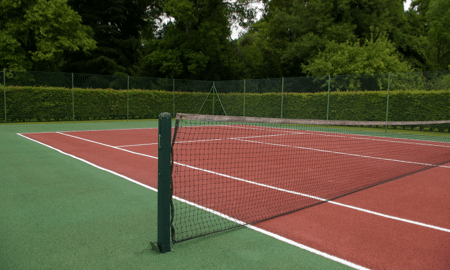
Understanding the Tennis Court Resurfacing Cost and Transformation Options
Resurfacing is the ultimate way to breathe new life into your athletic space without the massive financial headache of a full excavation.
At Lancaster Asphalt, we specialize in turning tired asphalt into beautiful, high-performance sports hubs.
How Much Does It Cost to Resurface a Tennis Court?
When property owners notice their court’s wear and tear, the very first question they ask is simple: How much does it cost to resurface a tennis court?
The average cost to resurface a standard tennis court typically ranges between $10,000 and $12,000, depending on the extent of the damage and the premium upgrades you choose.
While that range provides a helpful baseline, your total cost depends heavily on what lies beneath the surface.
A professionally resurfaced court dramatically enhances athletic safety, increases property value, and offers a smooth, reliable bounce that elevates everyone’s game.
For a deeper dive into the technical details of the process, explore our comprehensive guide on Tennis Court Resurfacing.
Core Factors That Influence Your Total Tennis Court Resurfacing Cost
No two athletic courts are completely identical, meaning a cookie-cutter quote rarely works. Here are the main elements that drive the estimate for your project:
Current Condition and Necessary Surface Repair

Before any beautiful new layers can be rolled out, the foundational asphalt must be structurally sound.
If your court has deep cracks, structural settling, or “birdbaths” (low spots where water pools), these issues must be addressed first.
Extensive surface patching and crack filling will add to the initial labor and materials, but it is entirely non-negotiable if you want the results to last. Discover how we fix foundational issues on our Sealcoating & Repair Services page.
Material Selection: Acrylic vs. Alternative Textures

The material you select directly dictates the performance, aesthetics, and final price tag:
- Acrylic Coatings: This is the gold standard for modern tennis environments. A multi-layer acrylic application offers vibrant color, excellent UV resistance, and a textured, slip-resistant surface that controls ball speed perfectly.
- Synthetic Grass & Cushioned Systems: If you are looking for an alternative that is easier on the joints, premium cushioned acrylics or synthetic grass overlays are available. However, these specialized materials will increase the overall project investment.
To weigh the pros and cons of these materials, take a look at our breakdown of Tennis Court Types.
Perimeter and Accessory Upgrades
A true athletic transformation goes beyond the baseline. When assessing your property, don’t forget the surrounding elements.
Budgeting to refresh a rusted chain link fence, replacing sagging nets, or upgrading to crisp LED lighting fixtures will complement your freshly rolled surface perfectly.
Inspiration & Design: Custom Color Combinations and Multi-Sport Functionality
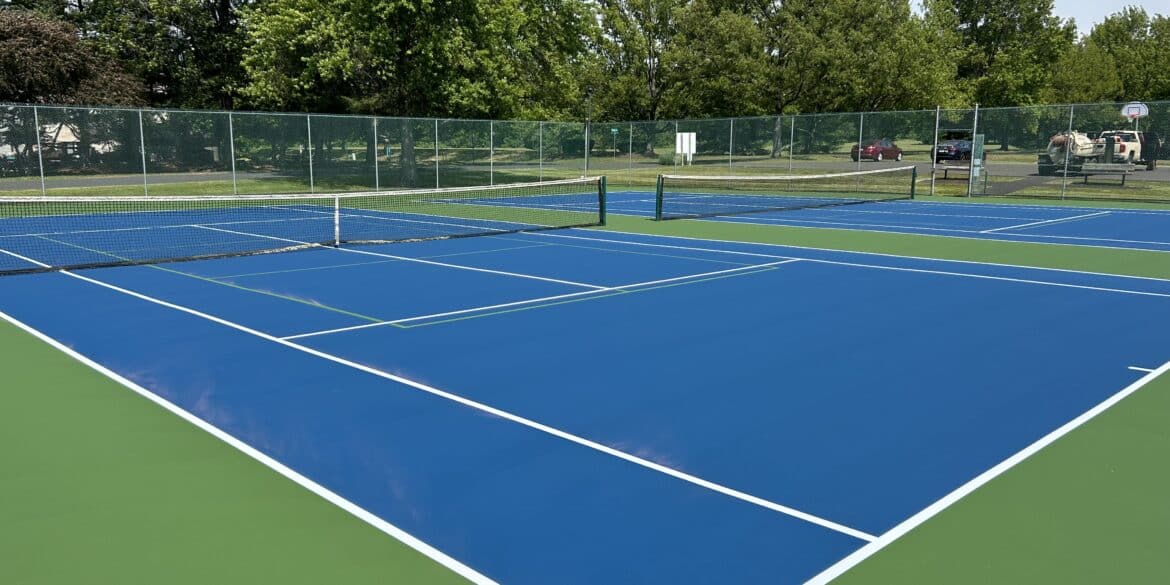
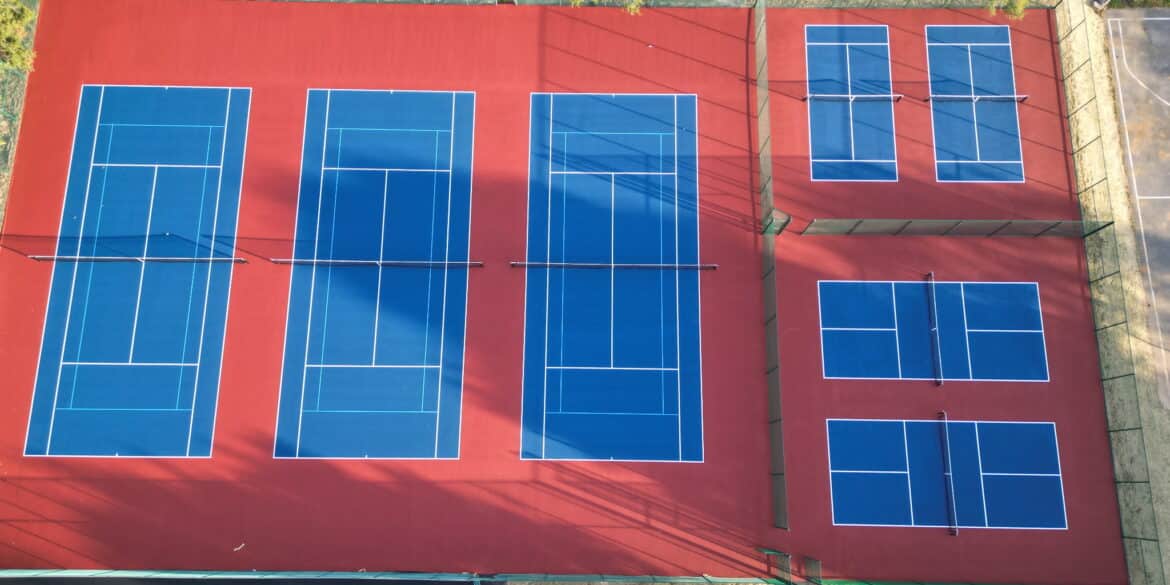
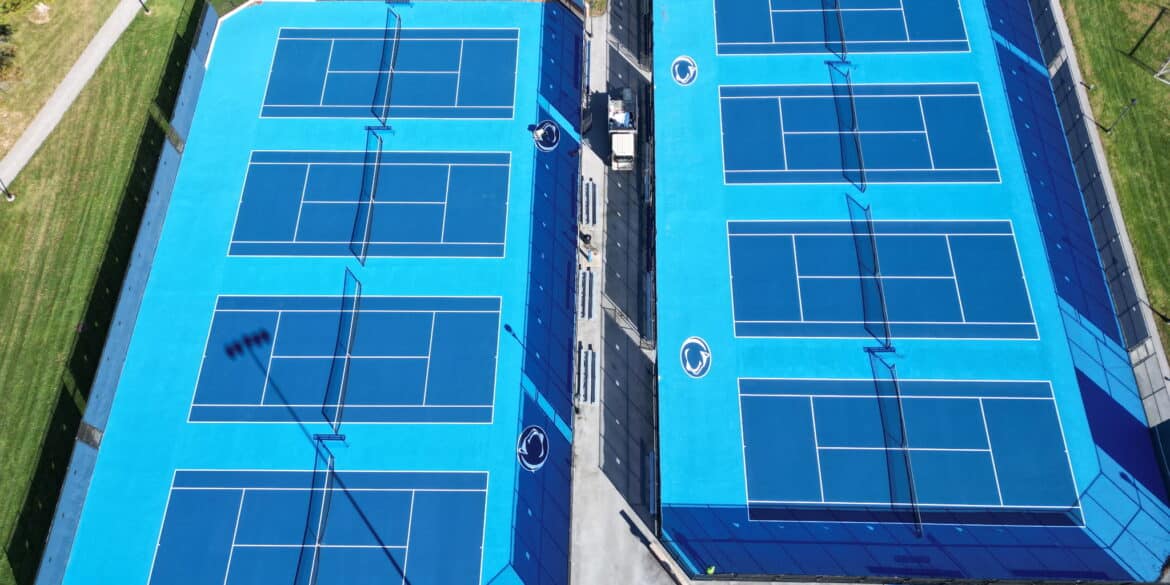
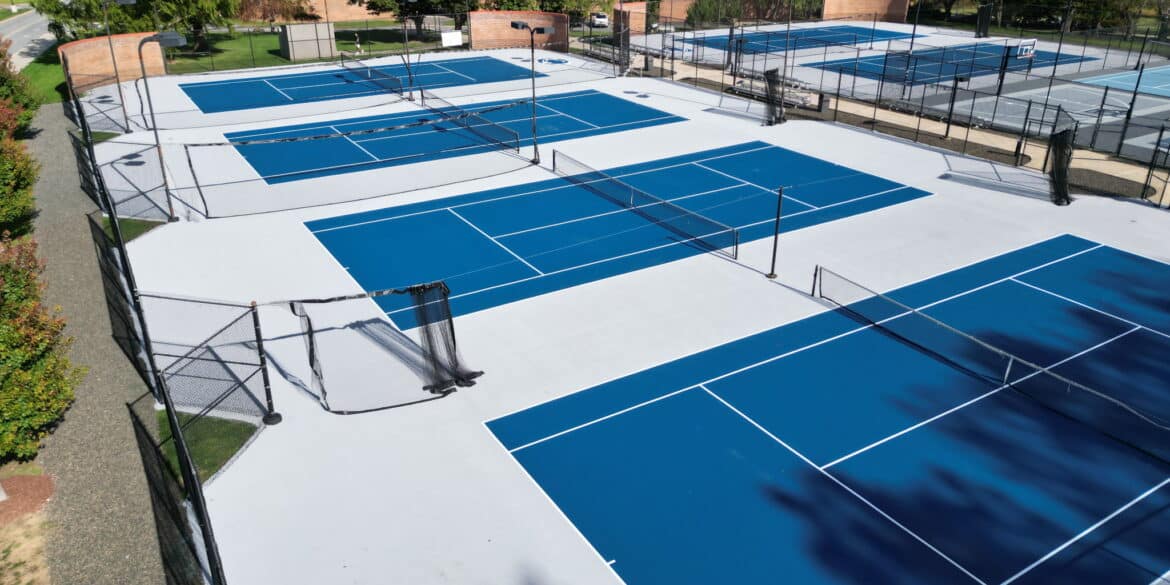
Resurfacing allows you to completely customize your court to reflect your personal style or organization’s branding.
- Stunning Color Combinations: You are no longer locked into standard forest green. Modern acrylic options allow you to mix and match. Think classic US Open Blue inside the lines with a contrasting Light Green perimeter, or sophisticated earth tones like dark gray and sandstone that blend seamlessly into upscale residential landscaping.
- Maximizing Multi-Sport Utility: Why limit your space to just one sport? By applying blended, dual-colored lines during the resurfacing process, your single-use area instantly transforms into a multi-sport court. You can easily integrate basketball courts or pickleball layouts, drastically increasing the utility and everyday enjoyment of your investment.
Maintaining Your Investment & Proactive Upkeep
Once your court looks pristine, you’ll want to keep it that way for as long as possible while keeping future maintenance costs down. Routine upkeep preserves the texture and color of your premium finish.
- Keep the court free of leaves, twigs, and standing pine needles, which can trap moisture and cause organic staining.
- Routinely check your perimeter drainage systems to ensure heavy rainwater flows away from the court rather than pooling beneath the asphalt foundation.
- Learn more expert care strategies by visiting our resource on Tennis Court Maintenance.
Frequently Asked Questions About Tennis Court Resurfacing
How often do athletic courts need to be resurfaced?
On average, a standard court should be resurfaced every 4 to 8 years. This timeline varies based on local weather extremes, the amount of foot traffic it receives, and how well the surface is cleared of debris.
Can you simply paint over existing asphalt cracks?
Unfortunately, no. Simply painting over structural cracks will result in the damage peeling right back through the new layer within a matter of months. Proper repair compounds and mesh texturing must be applied to the foundation first.
How long does the resurfacing process take?
The actual application process usually takes between 3 and 6 days of optimal weather. However, the surface must properly cure before players can safely lace up their sneakers and step onto the court.
Contact Us Today for a Custom Quote
Don’t let another season slip away while playing on a faded, cracked, or uneven surface. Your property deserves an exceptional athletic space that inspires you to get moving and sharpen your skills.
Stop guessing at the numbers. Let our experienced team assess your specific layout, evaluate the foundational asphalt, and provide an accurate, transparent breakdown of your tennis court resurfacing cost.
Take the first step toward your dream court transformation.
