
Our Guide to Tennis Court Construction
Imagine stepping out into your own backyard or community facility to play on a pristine, custom-built court.
Proper tennis court construction transforms a space into a place of athleticism, entertainment, and health.
However, achieving that perfect bounce and long-lasting durability requires expert design planning.
To ensure your investment yields years of enjoyment, let’s walk through the exact process of bringing your dream court to life.
Design Planning and Site Preparation

A flawless playing experience begins long before the first layer of material is poured. Meticulous preparation is the secret to a court that lasts for decades without structural failure.
Choosing the Right Location and Surface Area
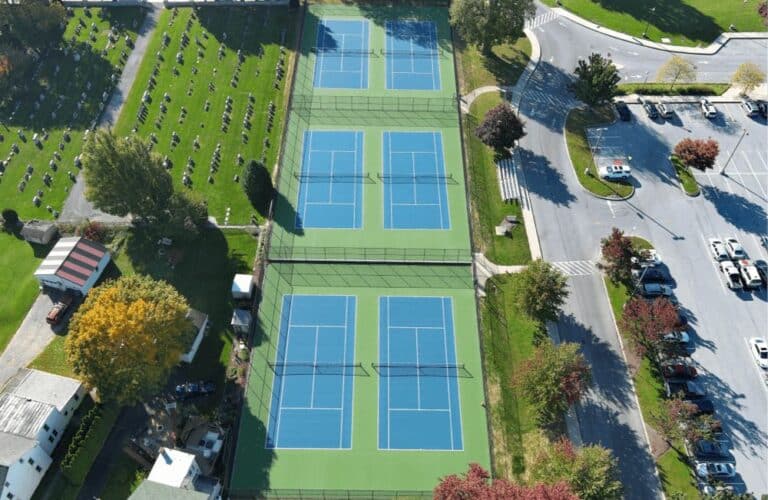
The first step is assessing your property to find the optimal location. A standard doubles court measures 60 by 120 feet.
However, when calculating the total square feet required for your surface area, you must account for the extra space beyond the baselines and the service line.
This run-out zone is critical for player safety and comfort. It prevents athletes from crashing into fences or tripping over landscaping during intense, cross-court rallies.
Groundwork, Grading, and Drainage
Once the location is locked in, the heavy lifting begins. The ground must be excavated, stabilized, and laser-graded to create an even playing surface.
Proper drainage is arguably the most critical aspect of this phase. Without a drainage system to divert water away, moisture can seep into the sub-base.
Over time, this trapped moisture leads to foundational cracks and surface failure.
Building the Foundation
In professional construction, builders typically choose between a heavy-duty asphalt base or a concrete slab.
Selecting Your Court Surface
There are several exciting options to consider depending on your play style and maintenance preferences.
To dive deeper into the nuances of each, you can explore different tennis court types.
Hard Courts (The Asphalt Option)
Hard courts coated in high-quality acrylic resins are the most popular choice for residential and community properties.
They offer a fast, true bounce and a highly customizable aesthetic that provides a low-maintenance surface compared to their counterparts.
How is a clay tennis court made?

If you prefer a slower game that is easier on the joints, you might be wondering: How is a clay tennis court made?
True clay courts are constructed using a highly specialized, multi-layer system. It starts with a crushed stone base, followed by intermediate moisture-retaining layers, and is finally topped with a fine, crushed brick or stone dust top-dressing.
These courts require specialized underground or above-ground watering systems to maintain their unique, sliding playability.
The Classic Grass Court
For the ultimate tennis purist, nothing beats the prestige of a grass court.
Known for lightning-fast play and low bounces, grass requires an exceptional level of daily agronomic care, precise mowing, and regular rolling to keep it tournament-ready.
Multi-Sport & Pickleball Options

Why limit your new space to just one sport?
Many homeowners maximize their investment by adding blended lines for basketball, volleyball, or the rapidly growing sport of pickleball.
Check out our breakdown of pickleball vs. tennis to see how you can easily accommodate both games on a single slab.
Fencing, Lighting, and Accessories
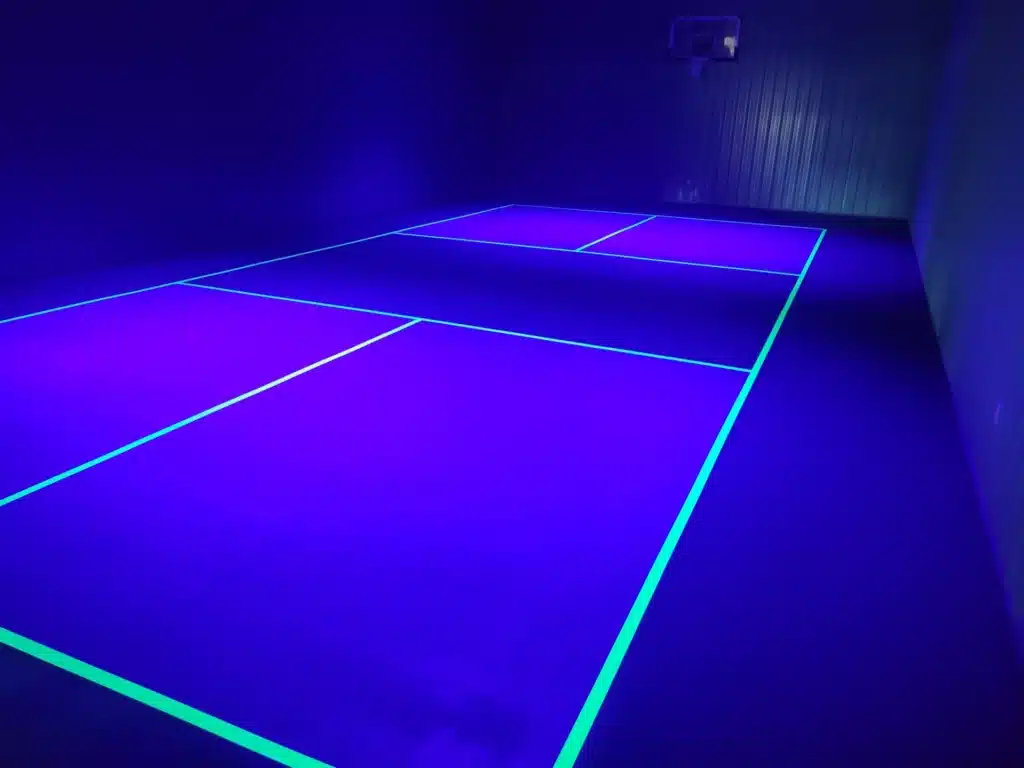
The foundation and surface are complete, but your court needs a few finishing touches before it is match-ready. Proper accessories enhance both the look and functionality of the space.
Essential court finishing touches include:
- Fencing: We work with subcontractors to install standard 10-foot chain-link fence that keeps rogue balls contained and secures the playing area.
- Lighting: We work with subcontractors to install state-of-the-art LED lighting systems that allow you to extend your playing time well into the evening with bright, even illumination.
- Nets and Posts: We install professional-grade net posts and heavy-duty nets that anchor the center of the court after the foundations have been dug.
- Windscreens: We install custom windscreens that provide privacy, reduce visual glare, and block crosswinds that can ruin a good match after the foundations have been dug.
Protecting Your Investment with Regular Maintenance and Care
To ensure your court remains beautiful and safe to play on, regular maintenance is key. Simple, proactive maintenance keeps your tennis surface performing beautifully and extends the lifespan of the acrylic coatings.
Routine care involves keeping the court free of organic debris, sweeping away standing water, and occasionally pressure washing the surface to prevent mildew buildup.
For a complete guide on preserving your court, review our comprehensive tennis court maintenance tips.
Even with care, acrylic surfaces will naturally fade and wear over time. When your court starts to show its age, professional tennis court resurfacing can breathe new life into the space.
If you are planning for the future lifespan of your investment, you can also learn more about understanding tennis court resurfacing costs.
Building a custom court is a phenomenal investment in your property value, your health, and your family’s lifestyle. But achieving that perfect, crack-free finish requires a team that understands the complex engineering beneath the paint.
Don’t leave your dream court to chance. Trust the experts who specialize in premier athletic surface and tennis court services.
